Please remember that if you or a loved one are experiencing thoughts of suicide or experiencing a mental health emergency, please call 911 or contact one of the 24/7 helplines:
Suicide & Crisis Lifeline: Dial 988 or visit 988lifeline.org
Crisis Text Line: Text HOME to 741741
National Domestic Violence Hotline: Call 800-799-7233
Additional Resources
Please take care of yourself. You are not alone.
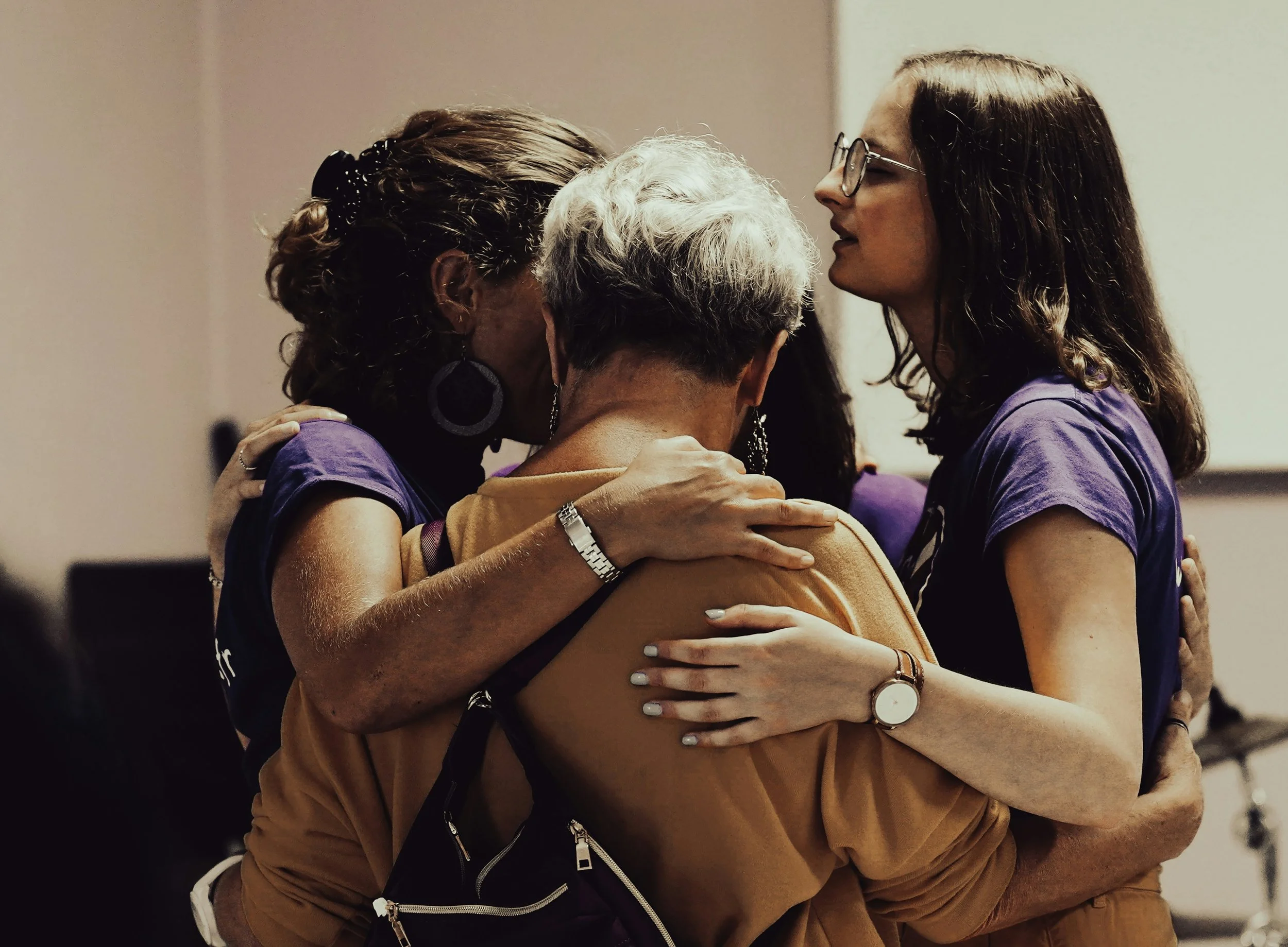
Isolation is Insidious
Whether you’re an introvert’s introvert, an excitable extrovert, or someone whose sociability falls between “Down for anything” and a modern day hermit, there is no denying the fact that people are social creatures. We crave connection with like-minded individuals and desire a connection to something that is bigger than ourselves. However, over the course of the last few years, everyone’s ability to be sociable and withstand social situations has nosedived. This can partially be attributed to COVID which wreaked havoc on everyone’s social skills and delayed an entire generation’s ability to make meaningful connections.
We survived a pandemic, but now we’re in an epidemic of social disconnection. Yes, it’s true that we’re more connected than ever before but the rates of loneliness people are experiencing aren’t going away and are steadily rising. Chronic loneliness is detrimental to physical and mental health. Loneliness is not only just a risk factor, but it can provide the fertile soil for depression and suicide ideation to grow. In today’s post, we’re going to review why we need other people and how having strong social connections can act as a buffer against suicide ideation and depression.
Community as a Buffer
It is often described that when a person is in the throes of suicide ideation or depression, they have blinders on. It makes it impossible to see beyond what is in front of them and what is in front of them is just pain. It’s hard to see anything else. The person becomes so preoccupied with a powerful internal dialogue that tells them that they are alone, that no one cares, and worst of all that there is nothing to live for. Tunnel vision is not a symptom of stubbornness, but it is one of severe distress. Community is the way that we’re able to rip off the blinders and ground a person to the here and now. Community tells the person that people do care, the pain is real, and that they are here for you.
Alfred Adler, founder of individual psychology, placed a heavy emphasis of “Gemeinschaftsgefühl” translated into “community or social feeling”. He believed that people were born with the ability to connect, but like any other skill that it must be honed through interaction and developed over the course of one’s life. It is empathy, it is connection, and cooperation with others. This is the core of individual psychology and it is a core that too many do not feel that they have adequate access to. When an entire generation is delayed due to a global pandemic and the rise of purity culture is predominant on social media, it creates and environment where people are constantly on edge and afraid to make mistakes out of fear that it could lead them to being ostracized by their community. Instead of socialization being an enjoyable activity, it now becomes something that is fraught with danger and pressure to appear to be perfect. It doesn’t allow for conversation regarding nuance or holding space for the reality that the human experience is messy, is imperfect by nature, and it is prone to making mistakes for growth.
Carrying the Emotional Load
Suicidal thoughts are heavy and can feel like they are all encompassing. That’s where community steps in. One person holds space for the emotions. Another person helps with day to day tasks by simply being present. The next person does a simple check-in to see how you’re doing. One person is not doing everything and the person experiencing the suicidal thoughts is less likely to experience the strange binary of “Tell one person everything, what them become overwhelmed and then they abandon you because you’re too much” or “I will tell no one and suffer in silence”.
Breaking up the emotional load allows the person experiencing suicidal thoughts to avoid confirming an all or none approach to help. It aid in refocusing what is happening in the here and now, and it establishes the fact that community is here for you in whatever capacity that feels comfortable.
Communities can and often do notice things that individuals believe that they have successfully hidden. Your family may not be aware of the amount of weight that you’ve lost, but a coworker who sees you everyday will notice. Your romantic partner may simply think that you’re making another dark joke, but to the friend at the yoga class it’s unlike you to do so. When we are isolated, we may not notice how fast and far we are slipping. However, when we are connected and there are multiple sets of eyes and ears who pick up on the changes in our behavior and mood, intervention is far more likely and can set in before a depressive episode becomes a high acuity crisis.
Strengthening Community Bonds
I am a firm believer that everyone likes the concept of community and being able to go to a place where everyone knows your name and they’re always glad that you came. But I know for a fact that people struggle with what actionable steps that they can take that will create that environment where people do want to join and be active participants. I struggled with that myself and so, here is a helpful guide to explore and strengthen the community that you are a part of or want to create.
Repetition - Consistency is key is pretty much everything that you do. Repetitious behavior within a group setting helps cement the stability of the group and reaffirms that being an active participant within the group will become a normal part of your life. DnD is at 6PM on Monday, Yoga class every Saturday morning. Neighborhood hangout happens on Sunday over at Mike’s house. The events happen without you even thinking about how you need to prepare. It become a part of everyday life.
Collaboration: Sitting around with everyone scrolling on their phones in not, in my humble opinion, a fun time. Active collaboration whether it is cooking a meal, playing a video game, going for a walk should require some level of effort to be engaged with the other person and the activity. The experience should allow to create fond memories. Scrolling on the phone is passive. Telling jokes, playing a game, going for a walk is active.
Vulnerability: The community needs to have space to talk about the hard things. If your community dissuades people from sharing how they truly feel, then it is not a community. Vulnerability is how close connections are formed. People do not want to know the mask. They want to know who you are, what you care about, and your thoughts and feelings. When you are vulnerable, other people will feel comfortable being vulnerable with you.
Rituals: Communities are ritualistic by nature. It doesn’t have to be anything big. Far from it, the simpler the better as to maintain it, but people have to know that after a weekly dinner, a walk will happen. Or that if someone posts about a bad day online, the entire group chat will respond with the same meme of Zuko going “That’s rough, buddy”. It doesn’t and shouldn’t be elaborate, but when the event does happen, the community members should know outright what the next steps will be.
Celebrations: The best communities celebrate and mourn the highlights and lowlights together. It’s not about acknowledging that good things happened or that you’re going through a rough patch. It is actively being involved in the person’s life and witnessing when they are doing their best and needing the support of the community to get through the rough patches.
Practicing asking for help: The best way to get the behavior that you want is to model it. Asking for help starts with you. It doesn’t have to start when things are sliding down the tubes. It can be for minor little things like “Can you help me with setting up for the party”, “Can you go for a walk with me?”, “Can I vent to you?”. These are small actions that set up and cement a healthy relationship where you trust one another and are willing to engage in vulnerability with each other.
Community Starts With You
When people think of suicide prevention, they think of therapy, medication, or sometimes long hospital stays in order to avoid death and self-harm. The reality is that while these interventions can be life-saving, they are often the last barriers. Early intervention is the best intervention. A person may be treated by the best therapists, psychiatrists, and social workers that money can buy but if they are alone and do not have a community then the cycle of loneliness will continue. We would be placing bandaids on a wound that requires open heart surgery. Community is thing that binds us all together. It’s the net that is beneath us when we feel ourselves falling. It’s lifesaving, but it’s only as effective as the person that shows up to participate.
Life is not a spectator’s sport. It requires your attention and participation.
So, that is why this September, I’d like for you, dear reader, to review your own communities and to ask yourself the following:
Is this a community that I feel comfortable in?
Does this community look out for other people?
How have I made an impact in my community?
Do I feel safe in my community?
The point isn’t to tear down any communities that you are in, but to reflect if the community is meeting your needs, if you are active in it, and how to better improve it and make space for people who may be struggling to socialize. Please remember that if you or a loved one are experiencing thoughts of suicide or experiencing a mental health emergency, please call 911 or contact one of the 24/7 helplines:
Suicide & Crisis Lifeline: Dial 988 or visit 988lifeline.org
Crisis Text Line: Text HOME to 741741
National Domestic Violence Hotline: Call 800-799-7233
Additional Resources
Please take care of yourself. You are not alone.